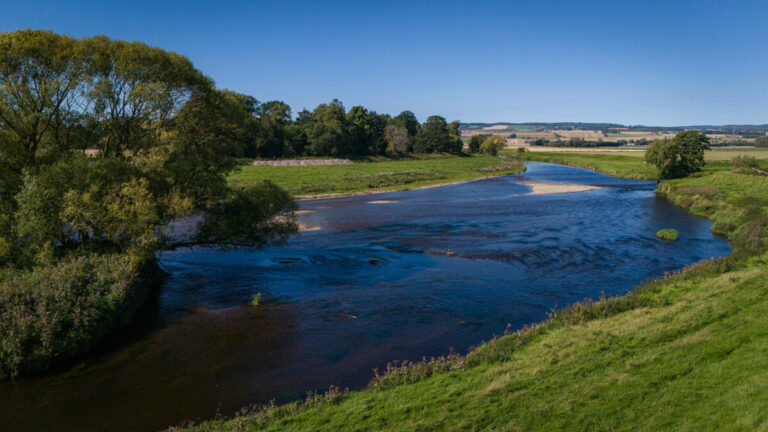
At the end of 2025, the River Ericht Catchment Restoration Initiative were delighted to receive confirmation of funding from Commonland to develop the Restoration Vision for the project. Work begins in January and the first stage will run through until the end of May. There will be plenty of opportunities to get involved and we’ll be publicising those through local networks.
The Importance of a Restoration Vision
The River Ericht Catchment Restoration Initiative is founded on a simple but powerful principle: lasting environmental change only happens when people, nature, and place are planned for together. Developing a restoration vision for the River Ericht Catchment is not about producing another technical report. It is about creating a shared long-term story of how this landscape could be regenerated and what it could become by 2050, and agreeing how the catchment’s communities of place and interest will shape that positive future together.
Understanding the Catchment
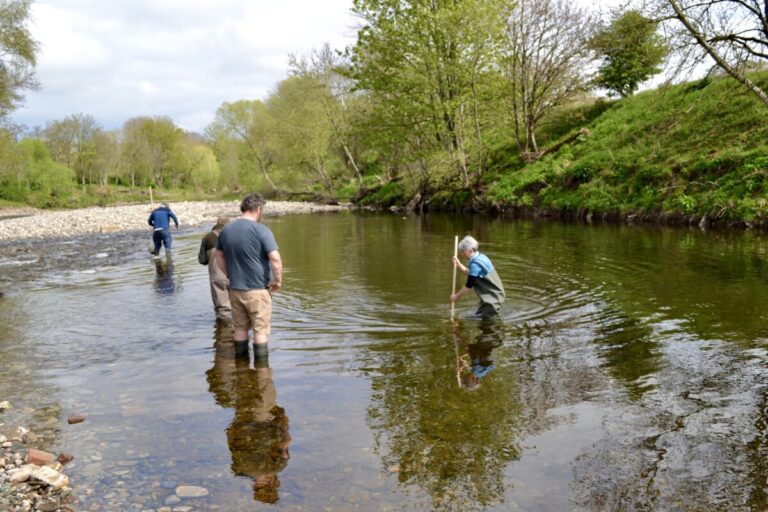
The process needs to begin with a shared understanding of the catchment, laying the foundations of a robust evidence base. This work started during the Design Stage. It included collecting information about the catchment’s hydrology and geomorphology, flood and drought risk, existing habitats, and the land-use history that has shaped the rivers and landscape over thousands of years.
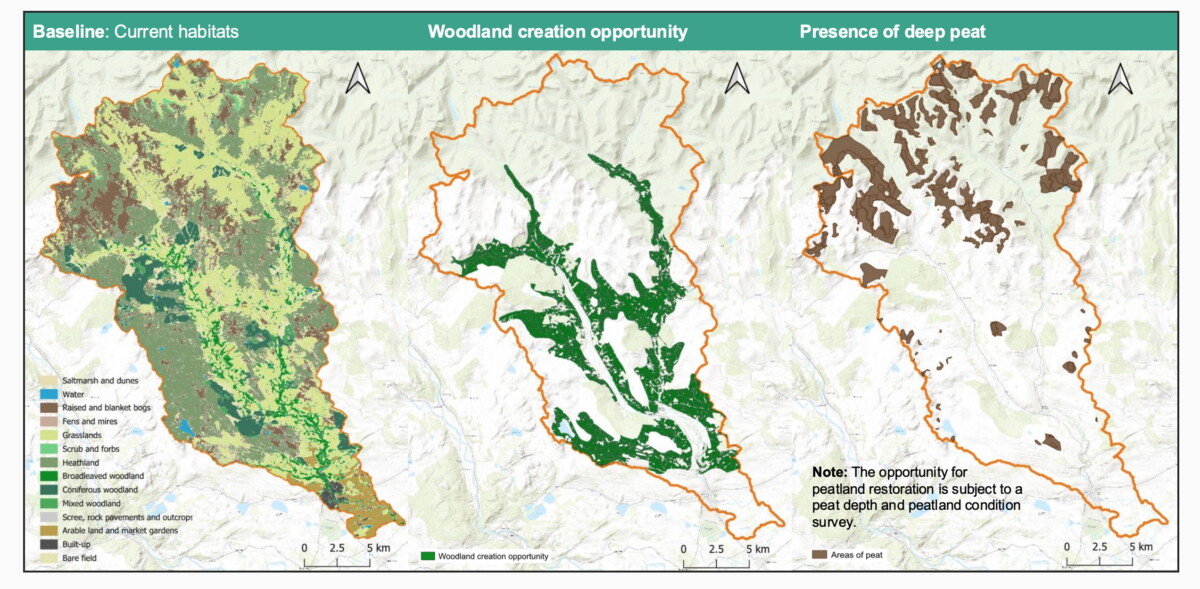
This first stage also brought together data on climate vulnerability, existing restoration activity, opportunities for woodland creation and peatland restoration, water quality improvement, Natural Flood Management, and biodiversity enhancement.
Going forward, aligning this evidence with local, regional, and national nature restoration plans will ensure that the vision is grounded in reality and informed by evidence, not assumptions.
Community-Led Visioning
Crucially, the Restoration Vision must reflect the voices of all those connected to the catchment – landowners and land managers, as well as the communities who live and work in Blairgowrie and Rattray, Kirkmichael, and everywhere in between. Early and meaningful engagement is central to this process.
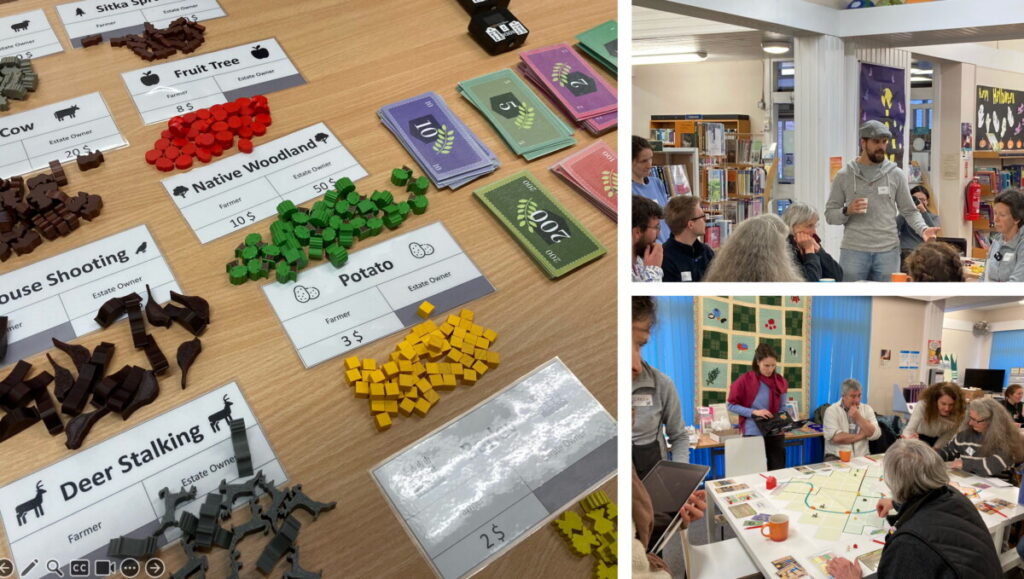
Listening sessions will help explore shared values and concerns, while participatory mapping will bring together local knowledge, Community Action Plans, and Local Place Plans. Together, these inputs will inform a collective visioning exercise built around a simple but transformative question: What should this catchment be like in 2050?
Principles That Guide Everything
From this process, a clear set of guiding principles will emerge. These will include nature-based, catchment-scale solutions; resilience to flooding, drought, and pollution; biodiversity recovery and connectivity; a just transition and community benefit; place-based restoration; working landscapes that continue to support farming and forestry; adaptive management; and collaborative, evidence-led governance. These principles will align local ambition with regional and national policy direction.
From Ideas to a Shared Future State
Scenario development then translates aspirations into a coherent future. Using mapping, visualisation, and ecosystem-service modelling, we will explore low, medium, and high-intervention futures. This allows trade-offs—such as woodland expansion versus grazing, or NFM measures versus access routes—to be openly tested and understood. The result is a shared picture of what success could look like over the next 20–30 years.
Turning Vision into Action
The vision is then expressed through clear, place-specific outcomes: restored river morphology and floodplain reconnection, connected riparian woodland corridors, reduced peak flows at vulnerable settlements, improved habitat condition, and tangible community benefits such as better access, recreation, and learning opportunities. These outcomes link ambition directly to delivery, monitoring, and funding.
A Living, Shared Roadmap
Finally, the vision is refined and validated through consultation, expert review, and community engagement. It is communicated through clear maps, visuals, and plain-English summaries, and embedded within governance structures, landowner agreements, funding strategies, and long-term delivery planning.
For the River Ericht Catchment, this process creates more than a document. It creates a shared, long-term roadmap to 2050—one that brings together nature recovery, climate resilience, thriving communities, and working landscapes into a single, coherent future for the catchment and everyone who depends on it.